
Strong attendance, confidence and progression
One of the clearest signs of learner engagement this year has been attendance. Across our courses, the average attendance rate has been 85%. For community education, and particularly for ESOL and resettlement learning, this is a strong achievement. Many learners are balancing childcare, employment, health appointments, transport challenges, housing pressures and family responsibilities, so sustained attendance at this level shows real commitment from learners and the importance of accessible, supportive provision.
The outcomes have also been encouraging. 75% of learners have progressed to other courses, with others moving into volunteering or paid work. This progression is central to Educafe’s approach: language learning is not an end in itself, but a bridge into confidence, independence, community participation and opportunity.
Learner feedback also shows the personal impact of the programme. 100% of students who gave feedback said that their confidence had improved. For Educafe, this matters deeply. Confidence is often the first step towards speaking to a GP, asking a teacher a question, applying for work, joining a group, volunteering, or simply feeling able to take part in everyday life in the UK.
As Ivan Korenkov, who attended our Business English course, said:
“I really enjoyed the Business English course with Rachel. She is a professional and supportive teacher who makes every lesson engaging and practical. I feel much more confident in my professional communication now. Thank you, Rachel, for this great experience!”
Oksana Chornobryvtseva also reflected on the learning environment, saying:
“The friendly atmosphere and the highly professional teacher, who motivates us to study. The tasks are clear and easy to understand.”
These comments reflect what we aim to create across all our learning: professional teaching, practical content, encouragement, clarity and a friendly atmosphere where learners feel able to grow.
Planning carefully in a challenging funding climate
This year has not been without its challenges. With a 40% reduction in available funding, careful planning has been essential. We have had to think strategically about how to offer the best possible value for money for our funders, while continuing to achieve excellent learning outcomes for our learners.
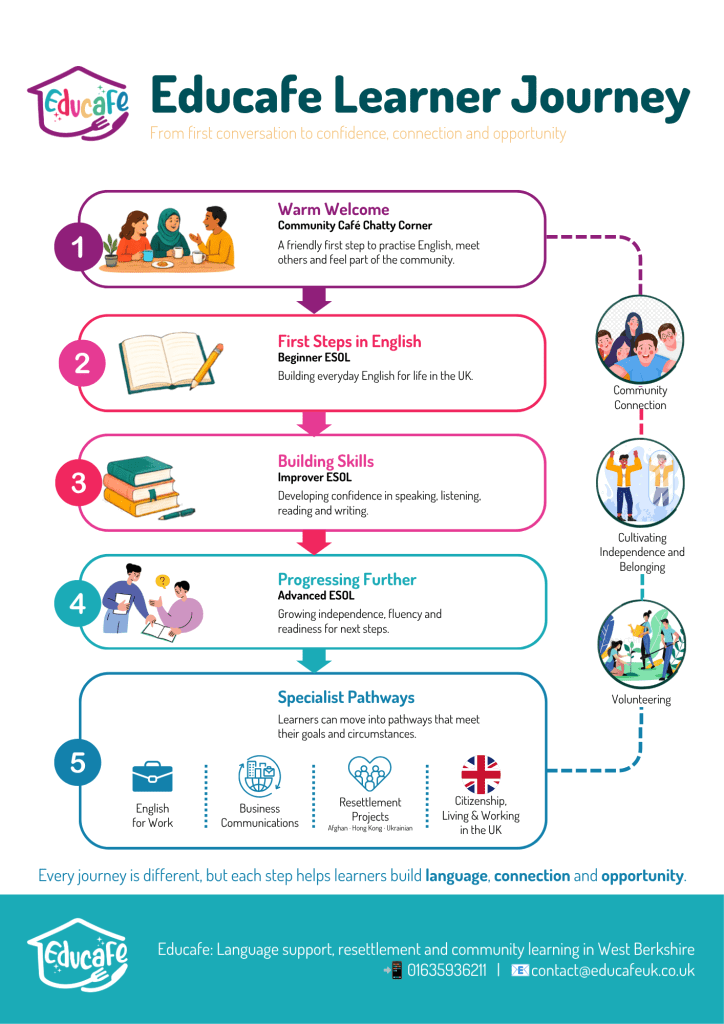
This has meant designing a programme that is both practical and responsive. Rather than offering isolated courses, we have aimed to create clear learning pathways: from informal conversation, to structured ESOL, to work-focused English, and then into wider community participation, volunteering, further learning or employment.
At every stage, our goal has been to make sure that funding has the greatest possible impact — not only through language development, but through increased confidence, independence, wellbeing and belonging.
A varied programme for different learner needs
The 2025–2026 programme has included a wide range of language support, shaped around the needs of local residents.
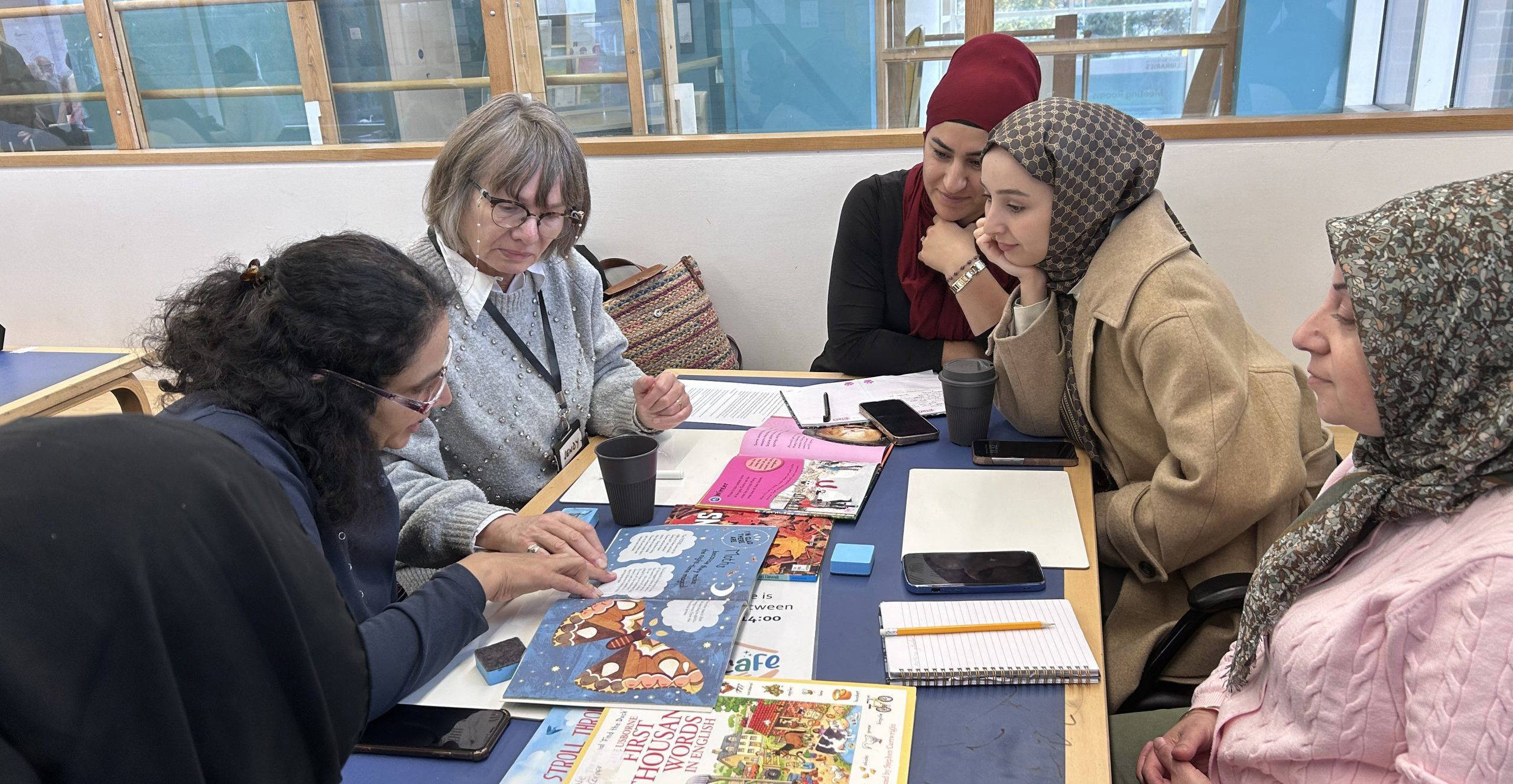
Our general ESOL courses have supported learners at different levels, including beginner, improver and advanced learners. These courses have helped people build everyday English for life in the UK, from speaking with confidence to understanding local services, school communication, healthcare, transport, community life and work.
For learners ready to move towards employment or professional development, Educafe has also delivered work-focused English opportunities. These included English for Work and Business Communication, helping learners develop the language, confidence and skills needed for workplace communication, job readiness and progression.
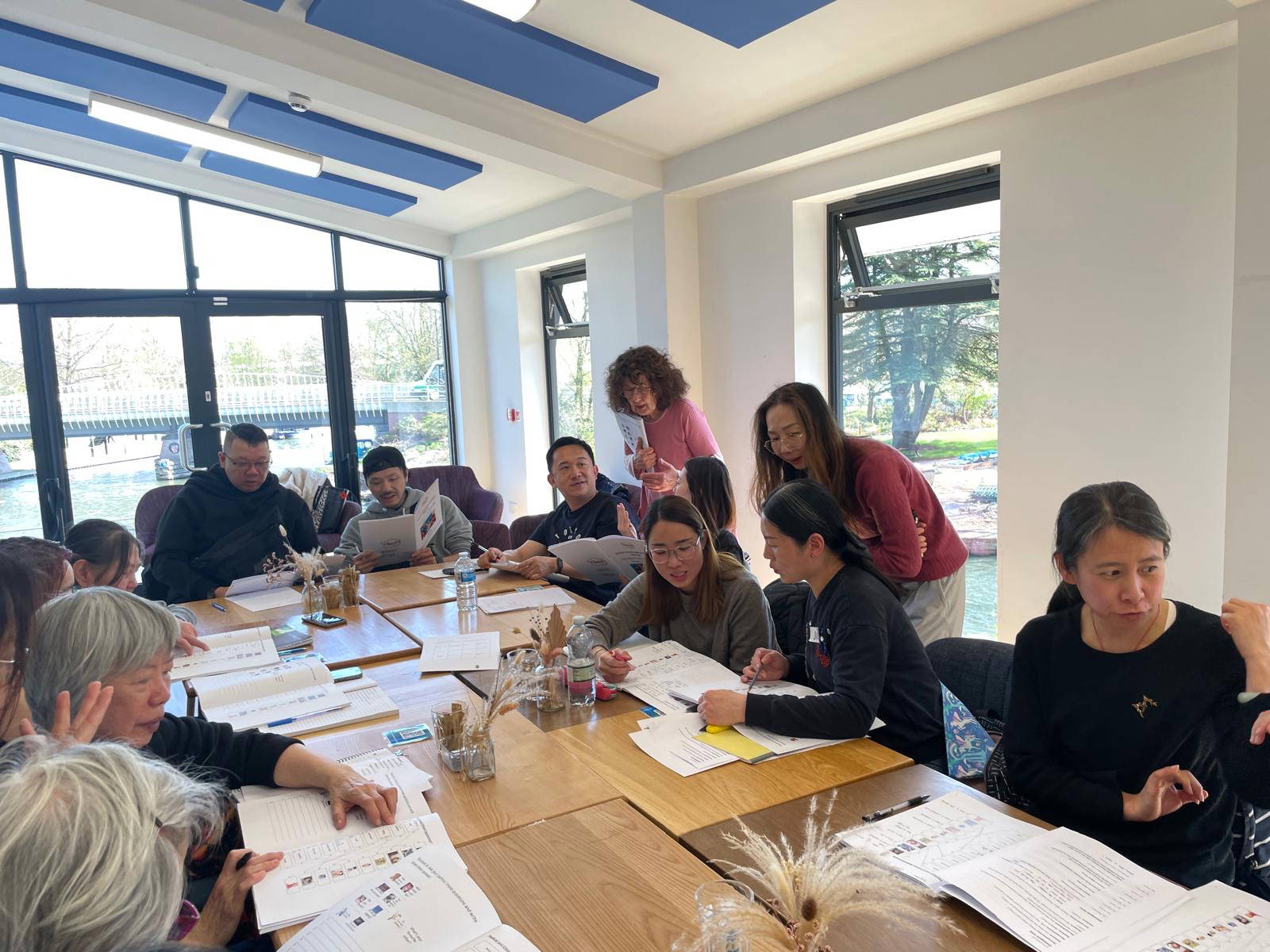
Alongside this, we have continued to support learners preparing for longer-term settlement through courses focused on citizenship, living in the community, and living and working in the UK. These courses are especially important for learners who want to understand more about British society, local systems, rights and responsibilities, and the practical steps involved in building a stable life here.
Resettlement support for Afghan, Ukrainian and Hong Kong communities
Educafe’s language programme has also played an important role in local resettlement support.
Throughout the year, we have continued to work with people from Afghan, Ukrainian and Hong Kong communities, recognising that language learning is often only one part of the resettlement journey. Learners may also be navigating trauma, displacement, housing concerns, employment barriers, family responsibilities, cultural adjustment, and unfamiliar local systems.
Our approach has therefore remained relational, flexible and community-based. We know that people learn best when they feel safe, welcomed and understood. By connecting language learning with friendship, signposting, cultural orientation and practical support, Educafe helps learners move from survival to participation.
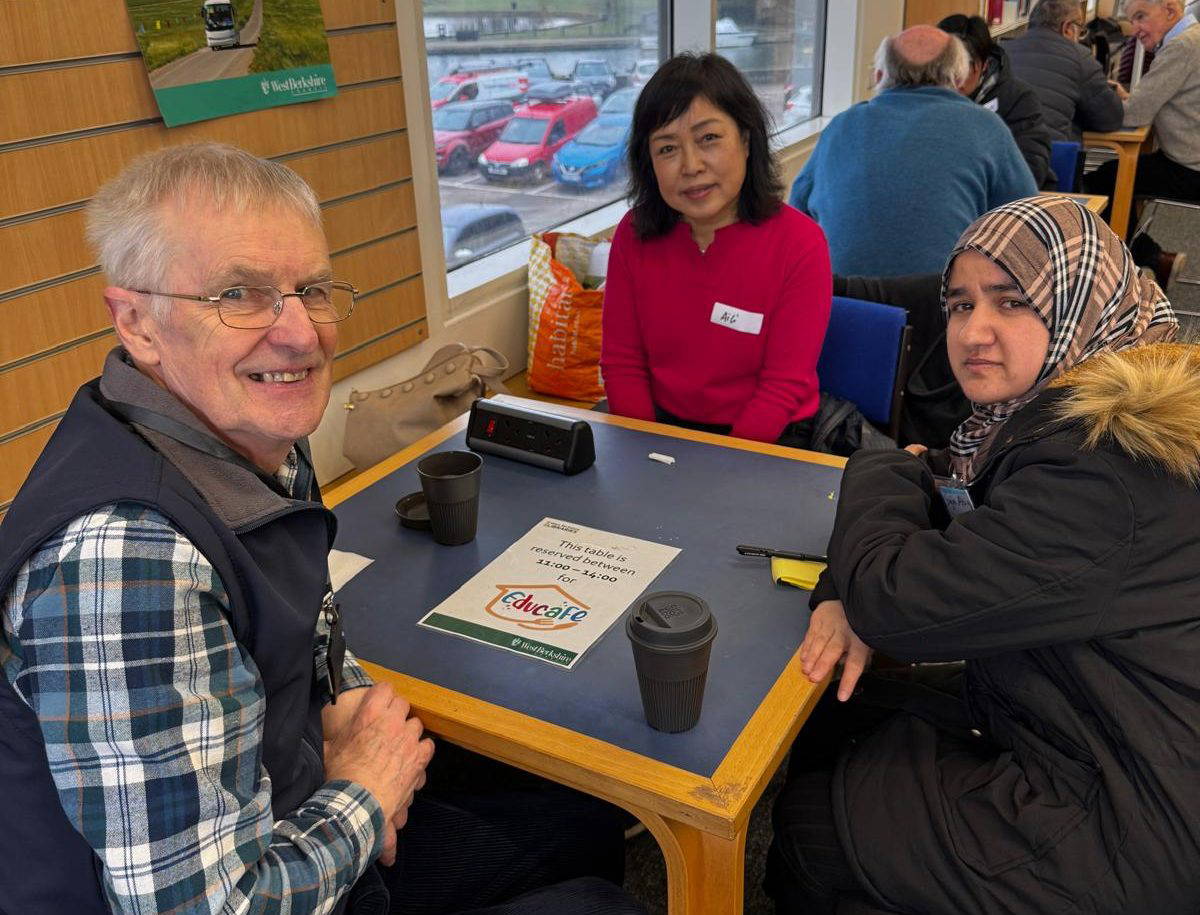
For some learners, the first step is joining a conversation table at Chatty Corner. For others, it is enrolling on a structured ESOL course, joining a targeted resettlement programme, or progressing towards work and further education. What matters is that there is a pathway — and that learners are not expected to navigate it alone.
The team behind the learning
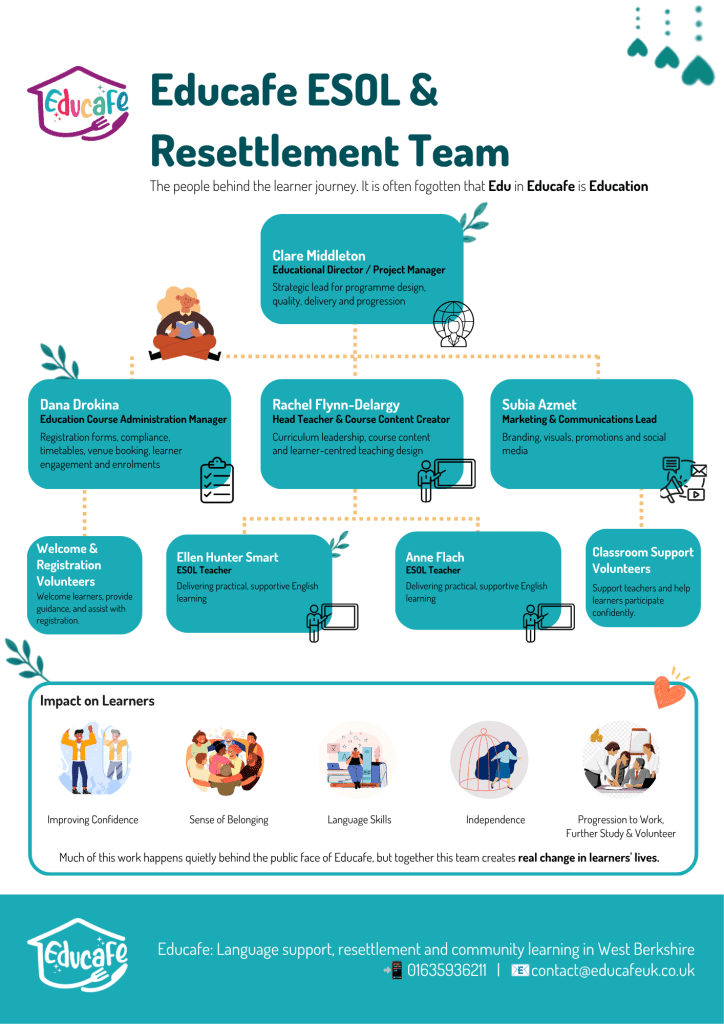
While Educafe is often best known for the warmth of the café, the conversations, the welcome and the sense of community, there is a dedicated education team working quietly behind the scenes to make the learner journey possible.
Our volunteers play a vital role at the very beginning of that journey. They welcome learners, listen carefully, signpost people towards appropriate courses, and often support them with the practical first steps, including completing registration forms and understanding what learning opportunities are available.
Behind every course is careful planning, administration and learner support. Dana Drokina, our Education Course Administration Manager, holds together many of the essential systems that make funded learning possible. This includes designing registration forms that meet funding and compliance requirements, creating teaching timetables, booking venues, managing learner engagement, supporting enrolments, and helping ensure that the right learners are connected to the right courses.
Our teaching programme is led and shaped by Rachel Flynn-Delargy, our Head Teacher and Course Content Creator, whose expertise ensures that learning is practical, relevant and responsive to learners’ real lives. Rachel’s work helps ensure that our courses are not just about language on a page, but about communication, confidence, independence and progression.
This year’s ESOL teaching has also been supported by Ellen Hunter Smart and Anne Flach, alongside the volunteers who assist teachers in the classroom and help learners feel encouraged, included and able to participate.
Our marketing and communications work is headed up by Subia Azmet, who ensures that our education and resettlement programmes are clearly, professionally and correctly branded. This matters because good communication is part of good access: if learners and partners cannot easily understand what is available, they may never take that first step. Subia and the marketing team create the visuals, promotions and social media content that help people find the right opportunities, recognise Educafe as a trusted place of support, and feel confident enough to join us.
Much of this work sits quietly behind the public face of Educafe, but it is essential. The forms, timetables, enrolments, venues, teaching plans, classroom support, learner engagement, promotion and follow-up all contribute to something much bigger: real change in learners’ lives.
It is sometimes easy to forget that the “Edu” in Educafe stands for Education. Our café creates the welcome, but our education programme helps people move forward. Together, they create the conditions for confidence, connection and opportunity.
Language learning as belonging
At Educafe, language support is never just about grammar or vocabulary. It is about confidence, connection and belonging.
When someone learns the words to speak to a GP, ask a teacher a question, apply for work, travel independently, join a local group or make a friend, the impact is life-changing. English becomes a bridge into community life.
This is why our language support sits at the heart of Educafe’s wider mission. It connects with our café, volunteers, parents’ activities, wellbeing support, community partners and local networks. Learners are not simply attending a course; they are becoming part of a community.
Looking ahead to 2026–27
We hope to be able to share more very soon about our ESOL and language support offer for 2026–2027. As always, our focus will be on providing accessible, high-quality learning that meets real community need and supports people to progress with confidence.
Thank you to our partners
We are extremely grateful to the partners and funders who have made this work possible.
In particular, we would like to thank West Berkshire Adult Community Learning, the West Berkshire Migration Team, and Newbury College and South East Strategic Partnership for Migration for their support, collaboration and belief in the value of community-based language learning.
Their support has enabled Educafe to continue providing responsive, practical and compassionate learning opportunities for people across West Berkshire.
As we look back over 2025–26, we are reminded once again that language learning is about so much more than words. It is about welcome. It is about opportunity. It is about education. It is about helping people feel that they belong.
And that is what Educafe will continue to do.
