
At the end of 2025, we began exploring how Educafe could adapt its principles to a heritage environment where history, culture, storytelling and archives could act as catalysts for connection, belonging and participation.
One year on and we can reflect on what we have learned so far, what has worked well, what has been more of a challenge, and what the future of Moonrakers’ Educafe might look like.
A new setting for connection and belonging
Moonrakers’ Educafe began as a partnership between Educafe CIC and Wiltshire & Swindon History Centre. The collaboration explored how Educafe’s community-led approach could be adapted within a heritage setting, bringing together conversation, volunteering, creativity, local history and opportunities for people to feel welcome.
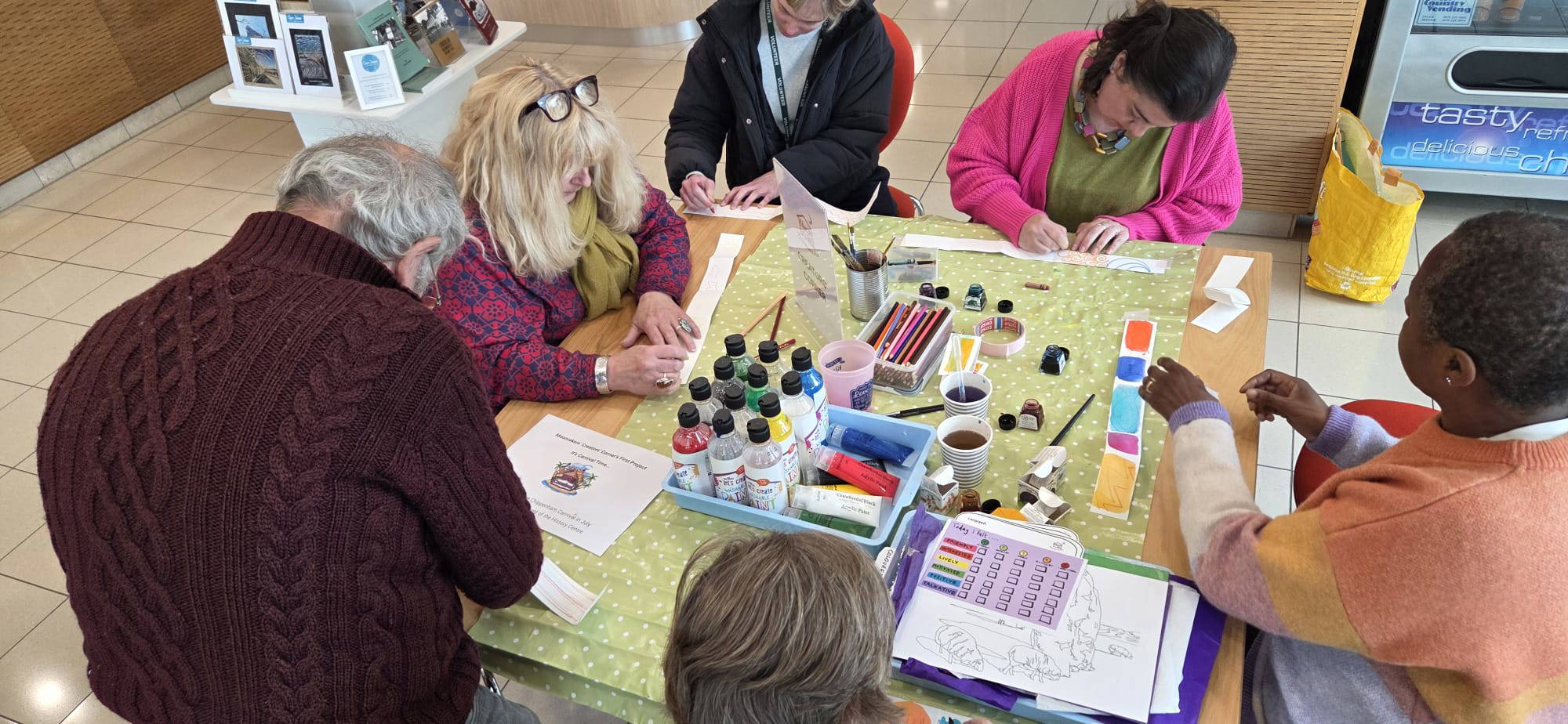
Following development work and a taster session, Moonrakers’ Educafe launched in April 2026. The locally led pilot offered a community café alongside activities such as craft, creative workshops, heritage exploration, conversations inspired by Chatty Corner and the Migration Stories initiative.
Promising experiences and honest learning
Feedback gathered during the pilot suggests that participants valued opportunities to meet others, return to the centre and explore services they had not previously used. One visitor who had found the History Centre intimidating subsequently sought support from the Wiltshire Family History Society. WSHC’s reporting also describes returning visitors and positive relationships developing among participants.
READ MORE: Reflection from WSHC
We are encouraged by these experiences, while recognising that a pilot’s promising stories do not, on their own, demonstrate long-term sustainability. Local outreach, consistent impact measurement, volunteer structures and access to dedicated coordination all proved important – and sometimes difficult – in practice.
What Educafe contributed
Educafe worked alongside the WSHC team through planning, mentoring and problem-solving, sharing experience and resources in volunteer development, communications, community engagement, safeguarding approaches and evaluation. WSHC led local delivery, bringing its knowledge of heritage, volunteers and community partners. The collaboration involved considerable behind-the-scenes work on both sides.
Current position
By summer 2026, Moonrakers’ Educafe had demonstrated clear evidence of community benefit, increased community use of the History Centre, strengthened volunteer engagement and positive wellbeing outcomes. The key recommendation emerging from our review is the establishment of funded coordination capacity to secure the long-term future of the programme.
READ MORE: The Hidden Cost of Community Leadership
The question we are now asking
The experience has helped shift our thinking. Rather than only asking, “Can the Educafe model be replicated elsewhere?” we are increasingly asking, “What conditions need to be in place for a community-building approach to take root and flourish?”
Our emerging Togetherness work is exploring how organisations might assess their own readiness for belonging-focused activity, understand their community connections and plan realistically for leadership, local coordination and specialist support. Two ideas being explored are an Organisational Readiness for Belonging Assessment and a Community Belonging Health Check. Both are early concepts, not finished tools.