

We were delighted to see the recent Ofsted report for West Berkshire Council’s Adult and Community Learning provision published in August, following the inspection visit in June.
Educafe is proud to be one of the community providers working in partnership with West Berkshire Adult Community Learning to support adults across the district. Although this was West Berkshire Council’s inspection, not an Educafe inspection, we were pleased to contribute evidence, welcome inspectors into our provision, and share how our ESOL learners are supported through learning, resettlement, enrichment and wider community connection.
You can read the Ofsted report here: West Berkshire Council Ofsted report
The report recognises many of the things that matter deeply to us at Educafe: inclusive learning environments, tailored support, community-based provision, strong learner progress, and learning that helps adults take fuller part in community life.
For us, ESOL is never just about grammar, vocabulary or passing a course. Those things are important, of course, and we take them seriously. But language learning is also about confidence, independence, belonging and opportunity. It is about being able to speak to a child’s teacher, book an appointment, ask for help, understand a letter, apply for work, join a group, volunteer, make friends and feel more at home in the local community.
Professional standards matter
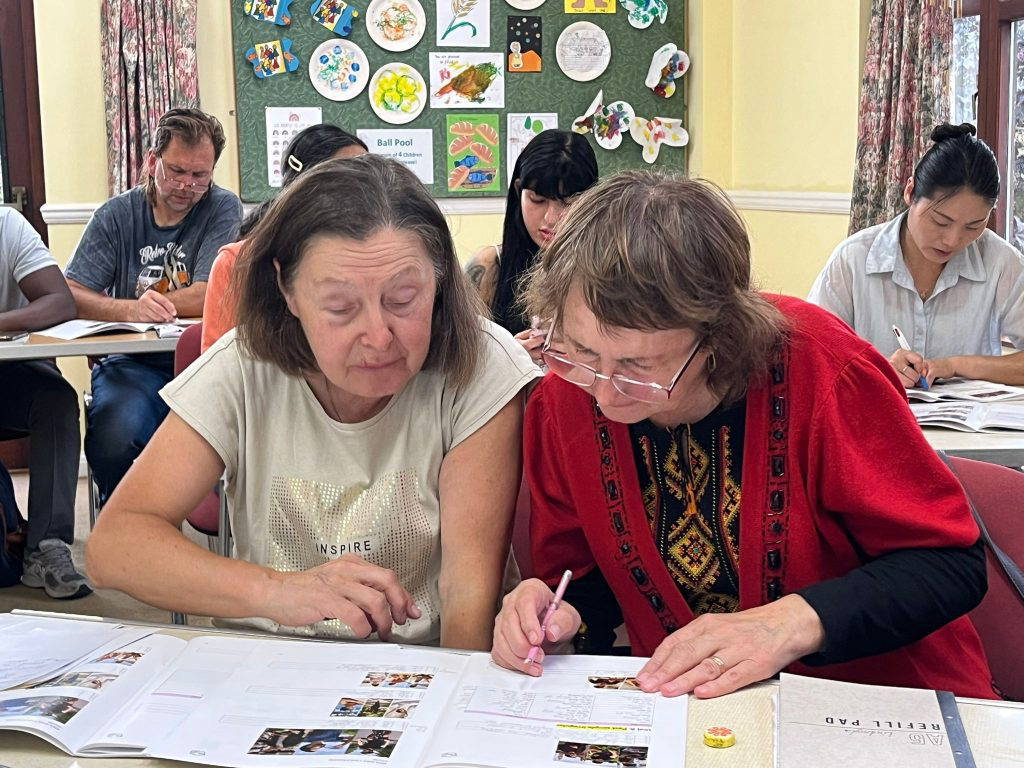
At Educafe, we pride ourselves on delivering ESOL to high professional standards. We work within West Berkshire Adult Community Learning’s quality framework and aim to ensure that our teaching, learner support, safeguarding, inclusion and progression all reflect the standards expected in adult education.
Our teaching staff are fully qualified and experienced ESOL professionals. They understand not only how to teach English, but how to support adult learners who may be facing multiple barriers, including low confidence, social isolation, trauma, interrupted education, caring responsibilities, financial pressure or unfamiliarity with UK systems.
Our Lead Teacher, Rachel Flynn-Delargy, develops schemes of work and course content that are responsive to learner needs. This means our lessons are carefully planned, but also practical, relevant and up to date. Learners might practise English for health appointments, schools, work, volunteering, local services, community life or everyday conversations. The aim is always to help learners use English with more confidence in real situations.
Behind the scenes, Dana Drokina, our Course Administration Manager, supports the learner journey through registration, communication, attendance monitoring, learner documentation and course coordination. This work is vital. Good ESOL provision is not just what happens in the classroom; it is also the careful organisation, follow-up and learner support that helps people stay engaged and make progress.
Recognising and recording progress
Adult community learning often uses an approach called RARPA: Recognising and Recording Progress and Achievement. This is especially important for non-accredited learning, where success may not always be measured by an exam or formal qualification.
At Educafe, we use a range of tools to help us understand and evidence learner progress. These include registration information, initial conversations, My Learning Plans, ILPs, attendance records, learner reviews, tutor feedback and examples of learner work.
This helps us look at progress from the learner’s starting point. For one learner, progress might mean moving from Beginner ESOL to an Improver class. For another, it might mean having the confidence to speak in a group for the first time. For another, it might mean attending regularly, volunteering, applying for work, joining Chatty Corner, supporting another learner, or speaking independently to a school, GP or local service.
We believe these outcomes matter. They are often the steps that lead to deeper, longer-term change.

ESOL, resettlement and community life
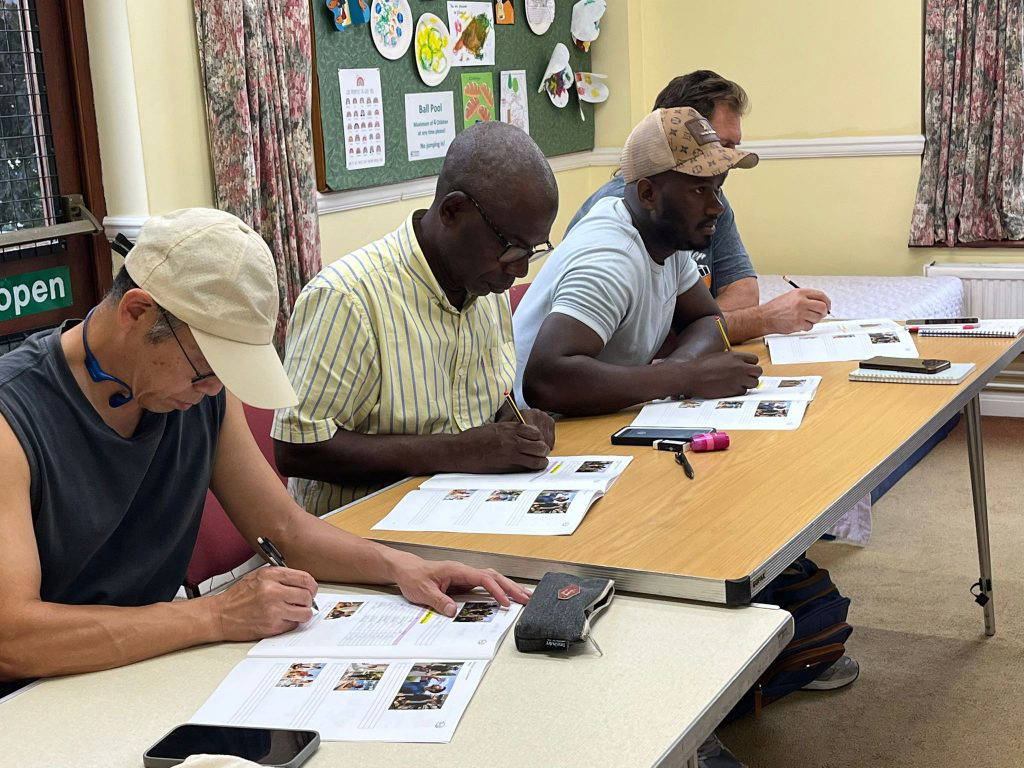
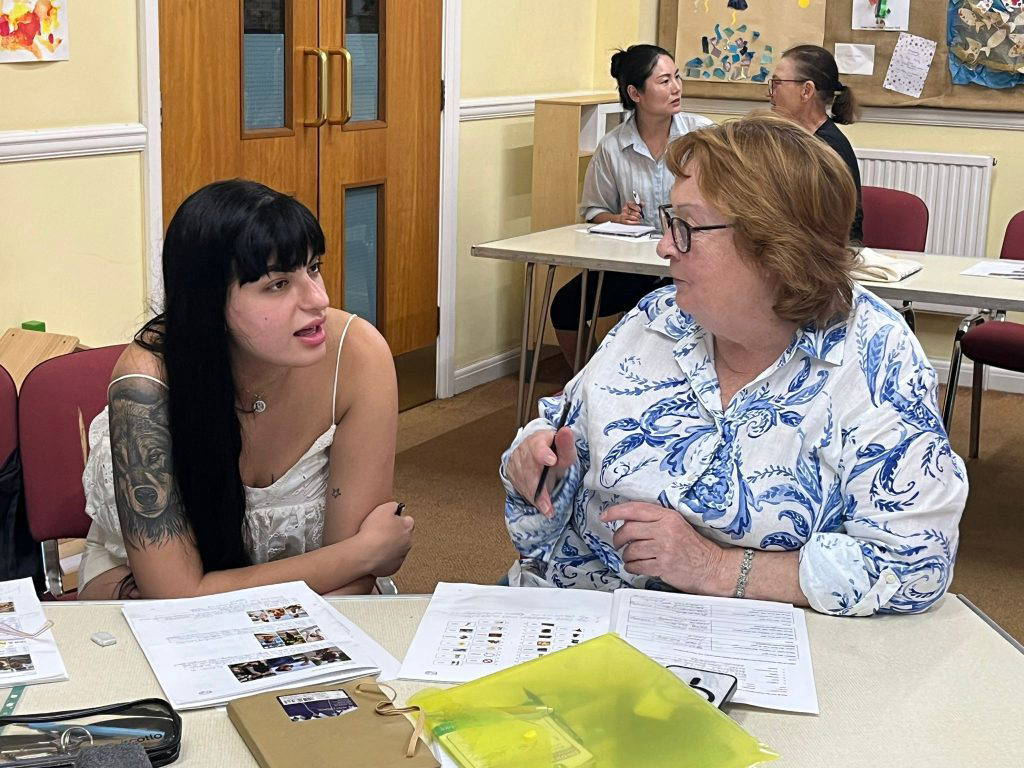
Educafe’s ESOL provision is closely connected to our wider work with resettlement and community inclusion. Many of our learners are refugees, new arrivals, parents and residents who are building new lives in West Berkshire.
Learning English is one part of that journey, but it sits alongside so much more: understanding local services, building friendships, developing confidence, learning how systems work, supporting children, finding routes into volunteering or employment, and feeling part of the wider community.
This is why our ESOL provision links closely with Chatty Corner, Parents’ Village, our Community Café, enrichment activities and partner organisations. Learners have opportunities to practise English in a warm, informal setting, not just in a classroom. They can meet volunteers, ask questions, access support, join activities and take small but important steps into community life.
Our learner enrichment activities, including trips and community experiences, are also part of this. They give learners real opportunities to use English, build confidence and feel that West Berkshire is a place where they belong.
British values in practice
In ESOL, British values are not something separate from learning. They are part of the everyday culture of the classroom and the wider Educafe community.
We promote mutual respect, listening, turn-taking, kindness, individual confidence, equality, inclusion and participation. Learners are encouraged to share their experiences, understand different perspectives, ask questions and take part in community life.
For people who are new to the UK, this matters. ESOL can help learners understand rights and responsibilities, local democracy, the rule of law, safeguarding, online safety, community expectations and how to access help. But it also works the other way around: our learners bring knowledge, skills, cultures, languages and life experience that enrich our whole community.
At its best, ESOL is a two-way bridge. It helps learners understand and participate in life here, while helping the wider community become more welcoming, informed and connected.

A team effort
The Ofsted inspection was a busy few days, and we are very grateful to our team for the extra work they did at short notice to support West Berkshire Adult Community Learning. Documents were gathered, timetables prepared, learner evidence collated and tutors supported, all alongside the normal rhythm of teaching and community delivery.
We are especially grateful to Rachel, Dana, Ellen, our volunteers and everyone who helped show the strength of Educafe’s ESOL and community learning model.
The report is a helpful reminder that adult learning can change lives in ways that go far beyond the classroom. It can build confidence, independence, friendship, wellbeing and opportunity. It can help people feel safer, more connected and more able to contribute.
That is what we are aiming for at Educafe: high-quality ESOL, delivered with professional standards, rooted in kindness, community and real-life impact.
